Sunday, May 27, 2012

The Moral Idiocy of the United Church


A recent high-level United Church of Canada report recommends that the United Church should confirm its hostility to Israel. Written by three prominent United Church officials, the Report of the Working Group on Israel/Palestine Policy endorses Palestinian “resistance” to Israeli occupation.
The church officials do specify that such resistance should be non-violent, but as with much in their report, the call for non-violence means less than it might.
I’ve never worried that United Church ministers might strap on suicide vests and blow up busses in Jerusalem. But while officially condemning such violence on the part of Palestinians, the United Church also vigorously promotes the Palestinian Kairos Document. Written by Palestinian Christians, the Kairos Document explicitly okays terrorism, calling it “legal resistance.” (More on the Kairos Document here.)
Do ordinary members of the United Church share the anti-Israel obsession of the clique at the top? Not at all. And I think they’d be appalled if they noticed what their leaders were up to.
In the most offensive paragraphs, the report compares the Palestinians to Holocaust victims. Usually, such comparisons come from obvious antisemites. In this case, I think the church officials are simply so self-absorbed, so wrapped up in anti-Israel politics, so shuttered from reality that they’re unaware of their offensiveness, like a four-year-old who’s overheard the word ‘nigger’ and admires his own cleverness as he runs about shouting it.
On the plus side, the report does notice that the BDS movement – the movement for boycott, divestment and sanctions against Israel – “sometimes” crosses the line to “delegitimize Israel’s existence,” which the church rejects.
Unfortunately, this again means less than it might. Because in truth, the only point of the BDS movement is to delegitimize Israel.
The BDS movement is purely a propaganda offensive. It has no economic effect and never will. Yet the report recommends joining the BDS movement through a boycott of Israel, specifically of “all products produced in the settlements.”
Does this mean that the United Church will boycott Agrexco, which exports agricultural products from the West Bank? The British BDS movement does – even though the Palestinians are 100 per cent dependent on Agrexco and similar Israeli companies to export their olives and other agricultural products.
While acting in a way that would crush Palestinian farmers if their efforts were successful, the boycotters get to tell themselves they’re fighting the evil Israelis. And this is what the United Church wants to be part of.
The report claims to take “seriously questions about why Israel is the only country in the world being challenged by a global BDS movement.”
Seriously? The report’s rationalizations are laughably thin. It notes that the Israeli occupation has lasted a long time. Well, yes, ever since 1967 when Jordan invaded Israel and Israel occupied the West Bank in its counter-attack.
Israel has a claim to this territory, which Israelis know as Judea and Samaria, but rather than unilaterally exercising its claim, Israel has maintained a perfectly legal defensive occupation while waiting for the Arabs to negotiate.
In 1994, Jordan finally signed a peace treaty with Israel. But Jordan had previously renounced its claim to the West Bank in favour of the Palestinians, who haven’t been so reasonable.
With the exception of United Church officials who remain willfully ignorant, everyone familiar with the Israeli-Palestinian conflict knows that Israel has offered several comprehensive peace plans, but that the Palestinians have refused them all and made no counter offers.
The United Church’s report calls for an end to the occupation. Fine. But talk to the Palestinians. They won’t even discuss peace. And the United Church report doesn’t suggest they ought to.
By way of rationalizing its singling out of Israel, the report also argues that Israel is a democracy, and therefore, should be held to a higher standard than the autocracies that surround it. To me, this seems rather hard on the downtrodden people of the region.
Syrians are being slaughtered in the thousands by their despotic ruler. But the United Church’s stance is that Syria isn’t a democracy, so too bad for the Syrians.
Or what about the Palestinians of Gaza? Ruled by the despotic fanatics of Hamas, Gazans have no free speech or free press and face arrest for crimes such as dressing immodestly.
Does the United Church find this problematic? Apparently not.
The territory is ruled by a terrorist group that’s not just dedicated to destroying Israel, but openly proclaims its goal is genocide against the Jews.
Will the United Church boycott Gaza? Not a chance.
Instead, the United Church proposes boycotting Israel – because it’s a democracy. Well, so is Canada! Also, like Israel, Canada has a long-standing dispute over land claims: Israel with the Palestinians, ours with First Nations. Also, like Israel, Canada is trying to negotiate a settlement.
Seems to me that these similarities make Canada a perfect target for a United Church boycott. Unless of course the United Church really is boycotting Israel just because it’s a Jewish state.

P.S. At least one United Church minister, Rev. Andrew Love, is trying to counter his church’s anti-Israel stance. (See here.)
This piece was previously published in the Jewish Tribune. And on Harry's Place blog in Britain.


And here are the comments from Harry's Place, preserved here, because at HP, they get deleted after a week:
Commentary101   
  26 May 2012, 2:38 pm
Excellent piece! Wonderfully articulate and well-put. Though, I dare say, this doesn’t surprise me at all; the trend(of gratuitous anti-Israel activities) has been blatant and obvious in Methodist/Presbyterian circles(especially in America), and it seems my hopes for Canada distancing itself from the torrent have been crushed.
What surprises me still is that the congregants don’t stop it. When will we see some action, on the part of honest, well-meaning, pious church-goers?
Dcook   
  26 May 2012, 3:57 pm
In 1994, Jordan finally signed a peace treaty with Israel. But Jordan also renounced its claim to the West Bank in favour of the Palestinians, who haven’t been so reasonable.
Its like evicting a squatter and the squatter says that they give up the right to squat in your house in favour of their mates, when they had illegally squatted in the first place.
Paul M   
  26 May 2012, 6:21 pm
This is a great, well written and well argued piece. The only bit that gave me pause — maybe only because I don’t know enough about the United Church — was:
“Do ordinary members of the United Church share the anti-Israel obsession of the clique at the top? Not at all. And I think they’d be appalled if they noticed what their leaders were up to.”
To me this seems like it’s infantilizing the church’s members. Shouldn’t we show them the respect of allowing them agency? As Commentary101 says, where’s the action by churchgoers to put a stop to this? Disinterest and apathy are common human traits, but they’re a poor excuse for allowing evil to be done in your name.
hasan p   
  26 May 2012, 6:39 pm
To me this seems like it’s infantilizing the church’s members. Shouldn’t we show them the respect of allowing them agency?
One could ask the same of union members, elected politicians and stockholders. As for the United Church, its ministers are not elected but ordained. The laity will have little influence over what is taught in theological schools and may have little influence over what their representatives say. And I very much doubt that elections to conferences have either high turnouts or that the congregations know much, or anything, about the candidates that stand in them. There certainly does need to be more action from churchgoers, but that should be done in a way that understands how the United Church works rather than just blaming them for their lack of interest.
oldpromoe   
  27 May 2012, 12:12 am
I was very pleased to read this article. As a Jew married to a member of the United Church, I have the opportunity to read the United Church’s monthly magazine, “The United Church Observer”. There is rarely an issue that doesn’t have at least one anti-Israel article or letter. Not once has The Observer had an article condemning Syria or the Egyptian treatment of the Coptic Christians. It makes one wonder if the United Church is merely anti-Israel or actually anti-semitic.
Brian from Toronto   
  27 May 2012, 2:30 am
I don’t blame ordinary church members. For the large majority, the church is just where they go to be married or buried. And I don’t see why the (small) number of regular congregants should have to pay attention to an insignificant conflict on the other side of the globe.
On the other hand, ministers are professional, paid members of the church; they really ought to notice what’s done in their name. But for the most part, they seem to be apathetic or they agree with the leadership's hostility to Israel.
However, they don’t all agree, and they’re not all keeping quiet:
http://brians-op-eds.blogspot.ca/2012/05/united-church-pastor-breaks-ranks-on.html
Osher   
  27 May 2012, 9:15 am
Factual error: Jordan gave up it’s claim to the West Bank in 1989 (although there wasn’t a peace treaty for a few more years).
Lamia   
  27 May 2012, 2:10 pm
By way of rationalizing its singling out of Israel, the report also argues that Israel is a democracy, and therefore, should be held to a higher standard than the autocracies that surround it.
Of course, many of those those who single out Israel for criticism will, when it suits them, claim piously that the Palestinian territories are also democratic (“Like them or not, Hamas have a popular mandate and are the legitimate government, etc…”), as are those paragons Iran, Egypt, Tunisia etc etc.
In fact the democratic legitimacy of Hamas is an article of faith with most ‘anti-zionists’. So the ‘we hold democracies to a higher standard’ is a feeble excuse, and demonstrate a nonsensical attitude anyway. We should hold all countries to the same basic standards re human rights, just as in individual countries we hold all citizens equal before the law and don’t give a pass to the badly behaved on the grounds that we shouldn’t expect better from them.
zkharya   
  27 May 2012, 2:25 pm
‘By way of rationalizing its singling out of Israel, the report also argues that Israel is a democracy, and therefore, should be held to a higher standard than the autocracies that surround it.’
Isn’t that a circular argument, tantamount to ‘Israel behaves better, so should be held to a higher account/more penalized for it?’
In a conflict, holding one party to a higher standard than the others is tantamount to taking sides in that conflict +against+ that party and +with her enemies+.
All else is moral idiocy, at best.
zkharya   
  27 May 2012, 2:26 pm
I mean, THINKING all else etc.
zkharya   
  27 May 2012, 2:30 pm
‘Israel is a democracy etc’
What does that argument actually mean, anyway?
Israeli Jews are more sophisticated, educated, western and so privileged? So that they should be more generous to their enemies?
Or Israeli Jews behave better and so, en effait, should be held to a higher account? -a circular argument, it seems to me.
In this case, Israel’s being a democracy is almost treated as though Israeli Jews have more wealth than is just, and so should share it with their enemies, who have less, and so suffer injustice.
Balderdash.
zkharya   
  27 May 2012, 2:34 pm
Democracy is +just+ a state in which a people comprise themselves. It may make them more vulnerable to criticism, and certainly means that citizens should have more rights than in tyrannies. But what on earth does it mean for those who would destroy their state, why does it mean that state should be held to higher account?
Palestinian Arab Muslim and Christian nationalists have been hostile to a large scale Jewish presence since the late 19th century. Why does Israel’s being a democracy mean it should be held to higher account than they?

Friday, May 18, 2012

United Church pastor breaks ranks on Israel, denounces ‘radical agenda’


Rev. Andrew Love leaving a prayer in a crack in the
Western Wall of the ancient Jewish temple in Jerusalem

A United Church of Canada minister has started a campaign to get rank-and-file members to reject a proposal from the church’s hierarchy to launch an economic boycott against Israel.
“I really want to believe this is the workings of a very active minority in the church,” said Andrew Love, a pastor at a parish in the town of Arnprior, 55 kilometres west of Ottawa.
“The vast majority of people in the pews are not ready to embrace this kind of extremist and radical agenda from a small minority. There is a real disconnect between the leadership and its people.”
He said the proposal contains “elements of anti-Semitism” by minimizing the importance of the Holocaust.
Last week, a working group of the United Church released a paper that called for a selective boycott of goods coming out of what the authors call illegal Israeli settlements, including East Jerusalem. 
This is the fourth proposal concerning sanctions against Israel in the past six years but none was ever voted on by the general council. However, this is the first proposal requested by the church leadership. Other proposals came from grassroots initiatives.
Rev. Love said he will launch a website in the next few days that will ask for support from co-religionists who are also concerned about calls for a boycott and anti-Israel sentiment in the church.
“This report is biased and one-sided and will erode a commitment we made as a church in a [2003 report] to strengthen ties with the Jewish community,” he said.
In 2009, Rev. Love said he travelled to Israel and spent time on the West Bank speaking to families who were having a tough time under Israeli rule. He said at one point he was pelted by stones by Israeli settlers because he was speaking with Palestinians.
“So it’s not that I’m blinded to the plight of Palestinians,” Rev. Love said. “But where is the sense of balance in this report? Once again we are isolating Israel for all our moral condemnation. Shouldn’t we hold to the same fashion other countries in the Middle East? It’s absurd that Israel is singled out because it’s a democracy.”
He added: “The report is almost completely silent on Israel’s very legitimate concerns to protect itself from terrorism as well as the ever present threat from Iran and the proxy forces that work for Iran in the region.”
He said the authors of the report also did not go far enough to denounce the use of the term “apartheid” when it comes to discussing the situation in Israel today.

You can visit Rev. Love’s web site here, and do send him a message of support here - I imagine it’s lonely standing up to the dominant clique in his church.

Thursday, May 10, 2012

A new racism in our kids’ schools


On May 5, an American, Tim Wise, was a keynote speaker at the Toronto District School Board’s  (TDSB’s) Futures Conference on Equity and Inclusive Education.

Wise is a card-carrying member of the American far left and doesn’t believe Israel has any right to exist.

Moreover, he frequently writes for the far left magazine Counterpunch. This magazine also publishes articles by the Holocaust denier Israel Shamir, by Gilad Atzmon who suggests that “maybe Hitler was right,” and by James Petras who believes that the “Zionist power configuration” controls America.

Strange company for a man who calls himself an anti-racist. But in truth, Wise’s mission is to emphasize racial divisions, not bridge them, and on May 5, he lectured Canadian teachers about the evils of “white privilege.”

In his essays, Wise explains white privilege thus: “The concept is rooted in the common-sense observation that there can be no down without an up.” Or if blacks are underprivileged, whites must be “overprivileged.”

To illustrate, Wise gives a laundry list of supposed white privileges, including “not having to worry about triggering negative stereotypes, rarely having to feel out of place, not having to worry about racial profiling, etc.”

Note that these privileges are defined negatively. Obviously, stereotyping is wrong. But how does not being stereotyped amount to a privilege? Or if blacks are deprived of dignity, are we to understand that whites must have too much of it, as if there’s just so much human dignity to go around?

Of course some people do come from a privileged background. I’d say that President Obama’s kids have a leg up on most people – and good for them! Life’s too short to worry about other people’s luck.

But the notion of white privilege is disconnected from any actual privilege. The claim is that ordinary, fair-minded and hardworking Canadians have more than they deserve – but only if they’re white.

A poor white kid with a single mom on welfare may not have breakfast, but theoretically he has a whole knapsack of privileges: male privilege, hetero privilege, ablest privilege – you name it.

Theorists of privilege fall into such absurdities because they discard individuals and see only groups; thus if some whites have been racists, all whites – you, me and our grand kids – are accountable for it.

So, for example, in “Of National Lies and Racial America,” Wise writes: “For most white folks, indignation just doesn’t wear well.”

Why? Because whites are morally compromised by the “genocide of indigenous persons, and the enslavement of Africans.” Obviously, no whites living today committed these crimes but other white people did and so, by the raced-based logic of privilege, whites today bear the responsibility.

Unfortunately, inviting Wise isn’t a one off for the Toronto District School Board. Much worse, the Board incorporates the notion of privilege into the curriculum with learning resources such as the “GLSEN Jump Start Guide: Examining Power, Privilege and Oppression.”

The literature on white privilege notes that students resist the concept. Sociologists Dan Pence and Arthur Fields write: “White students often react to in-class discussions about white privilege with a continuum of behaviors ranging from outright hostility to a ‘wall of silence.’"

Pence and Fields never consider that the students may correctly perceive themselves to be under racist attack.

The GLSEN guide recommended by the Toronto Board instructs teachers to solicit confessions from students about “the times that they have been oppressive or have used their privilege over someone else.”

Doubtless, our kids find it hard to come up with suitable sins. To help them, the guide gives an example: planning “a trip together without recognizing that one member of the group cannot afford to participate.”

That may not sound like oppression to me and you, but it’s all grist for teaching our kids that they’re part of a system of oppression that has produced every crime from slavery to genocide. The GLSEN guide observes that students may feel guilty. What a surprise!

Things may get worse. Professors at the Ontario Institute for Studies in Education (OISE) and the departments of education at York and Ryerson universities are busily lecturing student teachers on the ideology of white privilege.

This hit the news back in 2010 when the media noticed that OISE had granted a student a master’s degree for a thesis denouncing Jews as privileged and racist, and Holocaust education as a Zionist plot. (Read the Toronto Star's report on the scandal here, Werner Cohn's essay here, and his follow-ups here.)

It should come as no surprise that theorists who divides people into oppressed and oppressor groups, into good races and bad should put Jews in the bad column, particularly as the further to the left one goes, the more common it is to find people examining race through the lens of oppression and privilege.

As a parent of two kids in a Toronto public school, I'm glad to say that Toronto School Board truly does support equality for all our students, regardless of race, religion or sexual orientation  – and usually gets things right (though certainly not always). But because it supports equality, the Board must expel the notion of white privilege.


P.S. If Tim Wise has ever given two minutes thought to Canada, it’s not evident from his writings, but no one should doubt his talents as a speaker. At the TDSB’s Futures Conference, he reportedly compared being a person of colour to a disability, castigated Canadians for pervasive racism, and received a standing ovation. 
You can read a report on his talk here. Also, it was Richard K over at Eye on a Crazy Planet who broke the story about Tim Wise speaking at the TDSB's Future's Conference. Be sure to read his original piece here.

A slightly shorter version of this piece was originally published in the Jewish Tribune and on Harry's Place in Britain.


Sunday, May 6, 2012

As much of the world starves, the UN investigates Canada


By Hillel Neuer. From the National Post 
There is no food and no clean water, nothing,” Mahmoud, a 12-year-old boy from Homs, Syria, told Reuters Thursday. “There is no shop open and we only have one meal a day. How can we live like that and survive?”
According to the World Food Program, half a million people don’t have enough to eat in Syria. Fears are growing that the regime is using hunger as a weapon.
This is the kind of emergency which should attract the attention of the UN Human Rights Council’s hunger monitor, who has the ability to spotlight situations and place them on the world agenda. Yet Olivier de Schutter of Belgium, the “Special Rapporteur on the right to food,” is not going to Syria.
Instead, the UN’s food monitor is coming to investigate Canada.

That’s right. Despite dire food emergencies around the globe, De Schutter will be devoting the scarce time and resources of the international community on an 11-day tour of Canada—a country that ranks at the bottom of global hunger concerns.

A key co-ordinator and promoter of De Schutter’s mission is Food Secure Canada, a lobby group whose website accuses the Harper government of “failing Canadians…and [failing to] fulfill the right to food for all.” The group calls instead for a “People’s Food Policy.”

I asked De Schutter if his time wouldn’t better be spent on calling attention to countries that actually have starving people.

“Globally, 1.3 billion people are overweight or obese,” he responded via his spokesperson, “and this causes a range of diseases such as certain types of cancers, cardio-vascular diseases or (especially) type-2 diabetes that are a huge burden.”

In other words, the hunger expert is not even that interested in hunger, but the opposite. Sure, we should all eat less fries, but do Canadians need a costly UN inquiry to tell us that?

Before Canadians can take De Schutter seriously, they ought to ask him some serious questions about whether his mission is about human rights or a political agenda.

First, consider the origins of the UN’s “right to food” mandate. In voluminous background information provided by De Schutter and his local promoters, there’s no mention that their sponsor was Cuba, a country where some women resort to prostitution for food. De Schutter does not want you to know that Havana’s Communist government created his post, nor that the co-sponsors included China, North Korea, Iran and Zimbabwe.

These and other repressive regimes are seeking a political weapon to attack the West. That is why the first person they chose to fill the post, when it started in 2000, was Jean Ziegler. The former Swiss Socialist politician was a man they could trust: In 1989, he announced to the world the creation of the Muammar Gaddafi Human Rights Prize.

The award spread propaganda for its namesake, and elevated his ideological allies. Recipients include Fidel Castro and Hugo Chavez. In 2002, the prize went to convicted French Holocaust denier Roger Garaudy — and to Jean Ziegler himself.

From 2000 to 2008, Ziegler’s UN reports and probes turned a blind eye to the world’s hungry. Instead he attacked America, the West, capitalism and Israel. The human rights council applauded him, and repeatedly renewed his mandate. Only because of term limits did they replace him in 2008 with De Schutter, who praises and emulates his predecessor.

De Schutter’s consistent argument is that if there is hunger, Western countries are to blame. His attacks on international trade are so ideologically extreme that even Pascal Lamy, head of the World Trade Organization and a member of the French Socialist party, criticized De Schutter’s approach for threatening to drive food prices higher and “exacerbating the negative impacts on poor consumers.”

Second, even when they visit the right countries, Ziegler and De Schutter reach the wrong conclusions. Ziegler went to Cuba, but it was a staged visit that hailed Castro’s policies as almost divine. De Schutter went to Syria—in 2010, long before the current crisis — and mentioned several problems, but his report took pains to repeatedly praise the Assad regime.

Like Ziegler, De Schutter has repeatedly made one-sided attacks on Israel lacking any nexus to his mandate. Last July, he issued a pre-emptive attack against his own boss, in a press release titled “UN Special Rapporteur opposes Ban Ki-Moon’s conclusions on flotilla.” De Schutter was outraged that a panel appointed by the UN chief found that Israel’s blockade of Gaza, to stop Hamas importing Iranian missiles, was actually legal — contradicting what De Schutter’s human rights council had said the year before.

Hunger is a human rights issue. Tragically, what most interests De Schutter and his council is scapegoating the West. For the next two weeks, that means Canada.

Hillel Neuer, originally of Montreal, is executive director of UN Watch in Geneva

Thursday, April 19, 2012

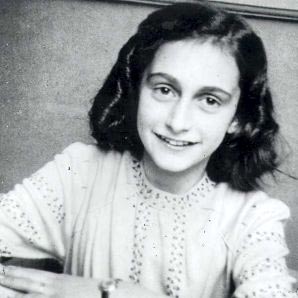
In memory of Anne Frank, one of a million Jewish children killed by the Nazis


A critique of Holocaust Universalization in honour of Anne Frank
By Dr. Catherine Chatterley, April 17, 2012


After decades of exposure to the Nazi murder of European Jewry, through education in schools and universities, the production of countless Holocaust histories and memoirs, the wide distribution of Holocaust related films, plays, and television programs, and, the construction of Holocaust memorials and museums, including a prominent federal institution in Washington, we are now facing pressure to include all people who suffered under Hitler into what we know as the Holocaust—the deliberate, systematic, state-sponsored annihilation of Jewish Europe.

How do we explain the apparent paradox of a culture that appears to be suffering from “Jewish Holocaust fatigue,”and yet knows very little about the history of this specific event and the pivotal role played by antisemitism in its conception and execution? To answer the question, we must begin to examine the phenomenon of Holocaust education and its universalizing methods, and try to assess what exactly people have learned about the Holocaust and antisemitism over the last several decades.

Part of the answer can be found in the material used to teach the subject. One of the central texts used by teachers, parents, and professors to educate students about the Holocaust is The Diary of Anne Frank. The book has been celebrated for decades but also criticized for its universalization, and not so subtle elision, of the Jewish experience under Nazism. The Diary was first published in Dutch as Het Achterhuis [The House Behind] in 1947, translated into French and German in 1950, and into English in 1952, with a play staged on Broadway only three years later.1

Instead of discussing the long and detailed controversies over the book and its theatrical applications, I will examine several trenchant critiques of the text that deserve our renewed attention. In 1960, Bruno Bettelheim wrote a psychosocial critique of the Broadway play (1955) and Hollywood film (1959) for Harper’s Magazine, in which he focused his attention not so much on Anne’s text but upon our use of it and our reaction to it. For Bettelheim, the larger culture’s “universal and uncritical response” to The Diary reflected “our wish to forget the gas chambers,” and instead take comfort in the false belief that Jews could retreat “into an extremely private, gentle, sensitive world” despite being surrounded “by a maelstrom apt to engulf one at any moment.”2 Even more offensive was our fetishized treatment of her statement, “In spite of everything, I still believe that people are good at heart,” to which the story is often reduced, when in fact Anne had written those optimistic words well before the attic had been sold out by a Dutch informant for about a dollar per person, the inhabitants deported to camps, her mother killed, and she and her sister Margot suffered abject death by typhus in Bergen Belsen in April 1945.

This “lesson” about the goodness of people, given the actual history of Anne Frank and her family, is patently false, and Bettelheim believed that it created an equally false sense of optimism, misleading readers to imagine Anne surviving the war. In fact, recent pedagogical studies of The Diary have demonstrated this exact problem. Students have been shown to characterize Anne’s diary as more “hopeful than sad,” as a story of survival, and even a love story. They appear to manifest a deep-seated resistance to the truth of her death in Bergen Belsen, which was described as “ruining” the story for one student in a classroom study.3
Bettelheim also argued that the platitude about human goodness “releases us effectively of the need to cope with the problems Auschwitz presents.”4 Writing in 1960, he did not mention antisemitism specifically, nor did he characterize the specific “problems” Auschwitz presents, but today we know that without antisemitism there would not have been a Birkenau, and yet The Diary allows its readers to disregard this reality entirely. Here, then, is a perfect example of the way students, and the larger culture, are exposed to the Holocaust and yet learn nothing in particular about the problem of antisemitism.

Lawrence Langer makes an important observation about the book in this regard. Instead of providing any actual information about the Holocaust or antisemitism, Langer argues, The Diary “enacts in its very text a designed avoidance of the very experience it is reputed to grant us some exposure to [and] thus her work helps us to transcend what we have not yet encountered, nonetheless leaving behind a film of conviction that we have.”5

In a devastating critique by Cynthia Ozick, The Diary is described as “bowdlerized, distorted, transmuted, traduced, reduced . . . infantilized, Americanized, homogenized, sentimentalized, falsified, kitschified, and, in fact, blatantly and arrogantly denied.”6 Like Bettelheim and Langer, Ozick denies the value of this text as a Holocaust document. To make her point, she proceeds to reconstruct the actual fate of the Frank girls, based upon the testimony of Belsen survivors, including Anne’s schoolmate Hannah Goslar: “[Margot] fell dead to the ground from the wooden slab on which she lay, eaten by lice, and Anne, heartbroken and skeletal, naked under a bit of rag, died a day or two later.”7

Equally important to Ozick’s graphic truth-telling is her revelation of the very real dejudaization of the book, revealed by the publication in 1995 of additional diary material removed by Anne Frank’s father Otto, subsequent publishers, and translators.8 Comparing editions now reveals that Otto Frank removed Anne’s numerous references to Judaism, including those describing Yom Kippur. Additionally, the Zionism of Anne’s sister Margot as well as the Hebrew the family sung at Hanukkah were deleted from the Hackett Broadway script approved by Frank. Additions that distort Anne’s story were invented by producer Lillian Hellman, who inserted lines like “we’re not the only people that’ve had to suffer . . . There’ve always been people that’ve had to . . . sometimes one race . . . sometimes another.”9

Even worse, Otto Frank allowed the translator of the German edition, Anneliese Schütz, to either remove or revise Anne’s passages about Germans. For example, in her list of house rules, Anne writes, “‘Use of Language: It is necessary to speak softly at all times. Only the language of civilized people may be spoken, thus no German.’ The German translation reads: “Alle Kultursprachen . . . aber leise!’—‘all civilized languages . . . but softly!’”10 Schütz justified her methods of distortion and exculpation as necessary because a book “for sale in Germany . . . cannot abuse the Germans.”11

Ozick tells us that a German drama critic admitted that the theatrical version of The Diary allowed Germans to see “our own fate—the tragedy of human existence per se.”12 And so, as Alvin Rosenfeld observes, “Anne Frank has become a ready-to-hand formula for easy forgiveness,”13 and of all things, Ozick argues, a “vehicle of German communal identification.”14

One is reminded of Theodor Adorno’s discussion of a German woman who left the play in 1959 saying, “Yes, but really, at least that girl ought to have been allowed to live.”15 The fact that Adorno characterizes this remark as a “first step toward insight,” for which he appears to be grateful, illustrates the pervasive antisemitism in postwar German society and the ongoing complicity of Germans in these crimes as late as 14 years after the war.

It would not be until 1991 that Germans would have the opportunity to discover the original content of Anne’s diary.

Cynthia Ozick describes Otto Frank in what are thought to be stereotypically German Jewish terms: secular, assimilated, and bourgeois, but also accommodating, even deferential in relation to gentiles and especially toward Germans. She interprets his primary role in distorting The Diary of Anne Frank as the result of his “social need to please his environment and not to offend it.”16 It has always been, and remains today, safer for Jews to avoid confronting gentiles about their antisemitism, and this reality, Ozick argues, is what led him to “speak of goodness rather than destruction,” and to allow The Diary to be “accommodated to expressions like ‘man’s inhumanity to man,’ diluting and befogging specific historical events and their motives.”17

Furthermore, the memorial he chose to honour his daughter was the Anne Frank Foundation18 and International Youth Center, both located in Anne Frank House in Amsterdam. Ozick argues that this memorial, dedicated to the humanistic goal of bringing young people across the globe into contact with one another, “nevertheless washed away into do-gooder abstraction the explicit urge to rage that had devoured his daughter.”19

Here, she is referring to Anne’s diary entry from 3 May 1944: “There’s a destructive urge in people, the urge to rage, murder, and kill.”20 Obviously, our choice to ignore these words and fetishize their very opposite, and then to present our choice as the epitome of Anne Frank and her experience, says more about the problematic needs of post-Holocaust Western culture than anything else. One can see how truly deceitful this cultural fetish is when the lines immediately following Anne’s comments about human goodness read: “I simply can’t build up my hopes on a foundation consisting of confusion, misery, and death. I see the world gradually being turned into a wilderness, I hear the ever approaching thunder, which will destroy us too, I can feel the sufferings of millions.”21

Our misuse of her words is actually perverse, as suggested by Griselda Pollock, in that we make the victim herself provide bystanders (and even perpetrators) “with comfort in our distress at encountering her suffering.”22

The primary approach of Holocaust education has been to universalize (and, in some cases, to Christianize) the experience of Jewish suffering in an attempt to make the subject matter accessible and meaningful to non-Jews. This was perceived as necessary after the war due to the antisemitic nature of postwar Western culture. There was a general hope that non-Jews would somehow imbibe that antisemitism was wrong from reading these stories and eventually from a curriculum that focused on the general evils of discrimination and racism and that promoted a doctrine of universal human rights.

Today, Holocaust education forms the basis for a new type of civic education. Increasingly, young people are learning about war and genocide in a comparative framework and the new civic values of peaceful reconciliation and human rights. In countries like Canada and the United States this curriculum presents an opportunity to celebrate ourselves in the form of the American Constitution, the Canadian Charter of Rights and Freedoms, and our Allied role in liberating Europe from Hitler. This is precisely the conclusion presented in the permanent exhibit of the United States Holocaust Memorial Museum, and it is the basis for the conception of the new Canadian Museum for Human Rights.

There is no doubt that Holocaust education has had a positive influence on Western society. It has helped to create our contemporary concern with fighting racism and promoting human rights and has helped generate our current interest in the historical and contemporary problems of genocide and war crimes. The problem, however, is that Holocaust education has not produced a corresponding concern about, or awareness of, antisemitism. Rather, what we have produced in contemporary Western culture is a general conviction, to use Langer’s term, that we have learned the “lessons of the Holocaust” when in fact few people outside the academic field know anything in particular about the Nazi Final Solution, its systematic destruction of Jewish Europe, and the nature and history of the antisemitism responsible for this catastrophe, which continues to evolve and is now in fact a global phenomenon.

Given this problematic reality, one wonders if Cynthia Ozick is correct when she suggests at the end of her critique of The Diary of Anne Frank that it may have been better for Anne’s diary to have been lost, and thereby “saved from a world that made of it all things, some of them true, while floating lightly over the heavier truth of named and inhabited evil.”23

Notes
1 As of 2001, the book had been translated into fifty-five languages and sold over twenty million copies.
2 Bruno Bettelheim, “The Ignored Lesson of Anne Frank,” Harper’s Magazine (November 1960), 45-50: 45.
3 See Karen Spector and Stephanie Jones, “Constructing Anne Frank: Critical Literacy and the Holocaust in Eighth-Grade English,” Journal of Adolescent & Adult Literacy 51:1 (September 2007): 36-48.
4 Bettelheim, 47.
5 Lawrence Langer, “Anne Frank Revisited,” in Using and Abusing the Holocaust (Bloomington: Indiana University Press, 2006), 16-29: 20-21.
6 Cynthia Ozick, “Who Owns Anne Frank,” in Quarrel & Quandary(New York: Vintage, 2000), 74-102: 77.
7 Ibid., 79.
8 This is in addition to Otto Frank’s removal of material that embarrassed the family, including Anne’s discussion of the Frank marriage, and material that would have been outside the bounds of decency in the 1950s, such as her discussion of contraceptives, female genitalia, and lesbianism.
9 Ozick, 95.
10 Ibid., 90.
11 Ibid.
12 Ibid., 98.
13 Alvin Rosenfeld, “Popularization and Memory: The Case of Anne Frank,” in Lessons and Legacies: The Meaning of the Holocaust in a Changing World, edited by Peter Hayes (Evanston: Northwestern University Press, 1996), 243-278: 271.
14 Ozick, 98-99.
15 Theodor Adorno, “What Does Coming to Terms with the Past Mean?” in Bitburg in Moral and Political Perspective, edited by Geoffrey Hartman (Bloomington: Indiana University Press, 1986), 114-129: 127.
16 Ozick, 85.
17 Ibid., 86.
18 Today the Anne Frank Foundation fights discrimination against minorities in Europe, with a specific focus on protecting the rights of Turks and immigrants.
19 Ozick, 86.
20 Ibid., 85.
21 Martha Ravits, “To Work in the World: Anne Frank and American Literary History,” Women’s Studies (1997), 1-30: 16.
22 Griselda Pollock, “Stilled Life: Traumatic Knowing, Political Violence, and the Dying of Anne Frank,” Mortality 12 (May 2007), 124-141: 139.
23 Ozick, 102.
A larger version of this essay was presented at Yale University in 2009.

Sunday, March 25, 2012

Congratulations to Thomas Mulcair and to the New Democrats for deciding to become a serious political party

Congratulations are in order for Thomas Mulcair, the new leader of Canada's official opposition. Congratulations are also in order for Brian Topp and the the whole field of leadership candidates. Perhaps most of all, though, congratulations are due to the NDP, which has decided to put aside its history and become a serious political party.

I was half-hoping the Dippers would retreat to the politics of vanity and elect Topp. After all, the party includes many despicable nut jobs (led by Libby Davies), and in some ways it would have been nice to see these people lock themselves back in the dream room.

Indeed by voting for Topp on the final ballot, 43% of Dippers declared that they'd really prefer to look in the mirror and admire their politcal purity rather than try to effect any actual change in the nation.

On the other hand, though, it really is a good thing for the country to have three serious political parties, and in particular to have an Official Opposition that's a force to be reckoned with, rather than being the political equivalent of a fart joke.

Sunday, February 26, 2012

Canadian Government cuts funding to cheerleaders for murderers, the NDP objects

Fern Rykiss of Winnipeg, 1972 - 1989.
An event at Palestine House last year,
celebrated the release of her murderer,
along with the release of 100s of other
murderers and their accomplices.
Palestine House in Mississauga is the political and cultural centre for Palestinians in the Toronto area. It also helps recent immigrants with learning English and integrating into Canadian society. The government has been funding the centre for the past 18 years, including $950,000 in 2011.

That funding has now ceased. “The government of Canada should not be funding groups that promote extreme positions – particularly under a program designed to promote social cohesion,” Kasra Nejatian told the Jewish Tribune. 

As an example, Nejatian, who is the director of strategic planning for Citizenship and Immigration Canada, cited a Palestine House event that celebrated the release of hundreds of convicted murderers from Israeli prisons. The prisoners were released as part of the ransom paid to the Hamas terrorist organization to free Gilad Schalit, an Israeli soldier Hamas had kidnapped some five years earlier.

Nejatian noted that one of the released terrorists, Abd al-hadi Rafa Ghanim, had Canadian blood on his hands; he was convicted of murdering Dr. Shelley Volokov Halpenny of Vancouver and 17-year-old Fern Rykiss of Winnipeg, along with 14 others in a terrorist attack on an Israeli bus in 1989.

A volunteer at Palestine House defended the event in a telephone interview. “As if we are not entitled to celebrate the political prisoners, as the other side celebrated Shalit. At the same time, we are happy.”

“Palestine House also has a history of associating with people who run afoul of Canadian law,” Nejatian continued. “For example, Issam Al-Yamani, the former executive director of Palestine House, was a member of the Popular Front for the Liberation of Palestine (PLFP), a designated terrorist group. Issam Al-Yamani even raised funds for the PFLP while in Canada.”

Personally, all I can say is that it’s about time! Local Palestinians are welcome to call for the destruction of Israel all they want and even to act as cheerleaders for terrorism – it’s a free country after all. But I do object to using my tax money to fund this extremist organization.

Of course there are moderate Palestinians. But they don't run Palestine House. To get some idea of the politics of the people who do run Palestine House, consider that in 2008, they held an event "to commemorate and honour the life and work of Dr. George Habash."

Habash was the leader of the Popular Front for the Liberation of Palestine, the terrorist group that in 1968 pioneered the hijacking of passenger aircraft. In addition to numerous acts of terrorism, Habash is chiefly remembered for his political radicalism. In 1970, his group set off the Black September War between the Palestinians and Jordan, which resulted in the deaths of at least 3,400 Palestinians. Subsequently, Habash's group also fought in the Lebanese civil war, which again resulted in the deaths of thousands.

But perhaps above all Habash is remembered for his opposition to any peace with Israel. As noted on the Palestine House website, Habash was "violently opposed the Oslo Agreements" between the Palestinian Liberation Organization, led by Yassir Arafat, and Israel.  In cooperation with Islamist groups such as Hamas and Islamic Jihad that were also forthrightly dedicated to destroying Israel, Habash helped organize Palestinian opposition to the PLO and to any accommodation with Israel.

And at Palestine House, they consider him a hero.


Naturally, Palestine House objects to having their funding cut. They need the million dollars a year the government has been giving them, and they’ve mobilized all their supporters, including the federal NDP. In a statement echoing the main talking points of Palestine House’s press release, the NDP says:

“New Democrats are disappointed by the decision of the Conservative government to arbitrarily terminate funding for settlement services at Palestine House…. This is the just the latest in a long line of politically-motivated funding cuts to public service organizations. From Palestine House to ecumenical KAIROS, this government’s unbalanced approach to the Middle East is hurting Canada’s reputation and isolating us on the world stage.”

In the NDP’s topsy-turvy world, it’s illegitimate to defund an organization just because it supports terrorism and celebrates murderers. Doing so is “politically motivated.” Perhaps. But if so, that sounds okay to me.

It’s also true that objecting to Palestinian terrorism earns Canada little credit on the world stage. After all, the Arab nations have enormous wealth and influence. They all hate Israel, and for the rest of the world, there’s no downside to giving verbal support to the Arab campaign to make the world’s only Jewish state a pariah.

But does Canada's principled stand do us any real harm? Not at all. No one supposes that China – or even Saudi Arabia – refuses to do business with Canada because we won't join in the name-calling against Israel.

In the world of diplomatic make-believe, Canada suffers a few snubs. In the real world, nations follow their best interests. And in the eyes of the world, Canada looks like a country you can count on.

Wednesday, February 8, 2012

"Welcome to the University of Victoria, a.k.a. Che Guevara U" by Michael Ross

From the National Post

At an espionage symposium at the University of Victoria in 2011, I spoke after a history professor who gave a lecture on the history of the CIA. I realize the CIA has had its share of shady moments, but this was an hour-long diatribe that could have been written by Fidel Castro. When I took the lectern, I told the audience that I’d be talking about the world of espionage, minus the politics, seeing as they’d endured enough ideological indoctrination for one day.


Were I asked to define the mission of a university, I would say it is the pursuit of truth and the dissemination of knowledge through research and teaching. Universities should enjoy autonomy as institutions, governing their own affairs internally and making their own decisions on academic matters. Having said that, some university departments have discarded the ideals of eternal truth in favour of mindless relativism and anti-Americanism/anti-Zionism; essentially existing as moral dead zones where faculty do little more than indulge their basest political biases and engage in what I can only describe as ivory-tower intellectual onanism.

Take for instance, the University of Victoria’s Social Justice Studies Department. (On the departmental website, a nostalgic photo of Che Guevara fades in and out, and readers are reminded that UVic is situated on the “territory of the Coast and Straits Salish people.”) A quick scan of the event list for February includes presentations on the gendered politics of militarization and globalization, the question as to whether the global justice movement is colonial, and of course that “social justice” staple that appears with the frequency of a bad penny: “Israel’s Blockade of Gaza — Canada’s Role.”

That’s right. Syria’s civil war, in which thousands have been killed, including hundreds of children tortured and murdered, apparently is a non-issue on campus. Iran’s nuclear ambitions and terrorism-sponsoring in Afghanistan, Iraq, Lebanon and Syria aren’t a priority. Robert Mugabe’s megalomaniacal destruction of Zimbabwe is off the syllabus, and Nigeria’s worsening religious-ethnic bloodshed is outré.

What is important to the UVic Social Justice Studies Department, however, is Ehab Latoyef — this being the Captain Ehab of the “Freedom Waves to Gaza aid flotilla” — who will be speaking at the university later this month. The university describes Mr. Lotayef as a “Montreal-based poet and long-time solidarity activist, who was on board the Canadian humanitarian aid boat, the Tahrir, which was heading to Gaza when it was hijacked by the Israeli navy in international waters.”

This is what the university considers social justice: A ridiculous pantomime that sailed last November to ostensibly break the Israeli blockade of Gaza, but instead made fools of themselves after the UN Inquiry found that Israel’s blockade of Hamas-ruled Gaza is entirely legal under international and maritime law.

It’s a sad reflection on any university that it has allowed its core principles to be subsumed into a self-perpetuating political and cultural subset of its faculty that is less intent on illuminating young minds than perpetuating their own ideological control of the syllabus.

Michael Ross is a former deep-cover officer with the Israel Secret Intelligence Service (Mossad).

Wednesday, February 1, 2012

We're funding politcal extremists


In Canada, almost no one supports those who hold extreme political views – they comprise perhaps 0.1 per cent of the population. But despite this near total lack of popular support, extremists continue to thrive.

Why? Because universities and granting agencies give them money.

The latest example of this comes from Queen’s and Simon Fraser universities, where professors Dorit Naaman and Dana Olwan have received a $223,000 grant to set up a multimedia installation in the Jerusalem neighbourhood of Qatamon (also spelled Katamon).

Before the establishment of Israel, Qatamon was a well-off Christian Arab neighbourhood. However, in 1947, the UN mandated the creation of two Palestinian states – one Jewish, the other Arab. The Jewish community accepted this deal, but the Arabs rejected it. Instead, Arab militias and armies from the surrounding Arab countries attacked the new state of Israel, intending to kill it at birth.

During the war that followed, Israeli forces captured Qatamon, and most of the neighbourhood’s residents fled – mainly to Beirut, Damascus and Alexandria, cities where they used to vacation. Those who remained became Israeli citizens, as happened throughout the territories Israel controlled.

However, the Jordanian army captured the old city of Jerusalem, including the Jewish Quarter, and the rest of the West Bank. The Jordanians expelled all Jews from their territory. A thousand or more of these refugees moved into Qatamon, and it has been a predominantly (though not exclusively) Jewish neighbourhood ever since.

That’s the history. Here’s what Dana Olwan said about her $223,000 multimedia project in the Queen’s University Journal:

“It’s important to understand that the Israeli-Palestinian conflict hasn’t ended yet.... Palestinians are being dispossessed from Jerusalem right now through the building of apartheid walls.... Understanding and challenging the contemporary nature of the occupation is a key aim of this project.”

Notice how extreme Olwan’s language. The "apartheid wall" is a security barrier Israel built to keep out suicide bombers. It's actually mostly a fence, but is a wall where needed to prevent Palestinian snipers from firing at Israelis as they walk down the street.

Notice also that Olwan’s language is entirely political. There’s nothing academic about her project – no spirit of inquiry or even pretence at open-mindedness. It’s purely a propaganda exercise.

The project’s aim, she said, is to challenge “the occupation,” which to Olwan’s mind includes Qatamon, even though this neighbourhood has been part of Israel since its founding.

Professors Olwan and Naaman have long been involved in anti-Israel politics. They both support Israel Apartheid Week, an annual campus event intended to exclude Israelis from humanity, and have both been speakers at Apartheid Week at Queen’s.

For her part, Professor Naaman has trouble grasping that terrorism is a bad thing. She signed a petition supporting Tali Fahima, an Israeli convicted of aiding Zakariya Zubeidi, who was a chief of the Al-Aqsa Martyrs’ Brigades during the height of the terror war against Israel.

In more recent years, Zubeidi has put away his bombs in return for amnesty from Israel and has even applied to enter Israel for medical care. Because he’s abandoned violence, Tali Fahima now calls Zubeida a “whore” and has transferred her allegiance to Raed Salah, an unreconstructed Jew-hater and a leader of the extremist Islamic Movement.

In an apparent bid for the useful idiot of the year award, Professor Naaman describes Fahima as merely “seeking dialogue with Palestinians.”

Professor Naaman also wrote a learned paper titled In the Name of the Nation: Images of Palestinian and Israeli Women Fighters.

In this paper, Naaman puzzles over why Israeli women soldiers are “considered a sign of progress, equality and modernity” while Palestinian women suicide bombers are considered “monsters.”

To Naaman, this reflects bias, a “serious cultural discrepancy.” She’s unable to grasp the difference between a soldier who protects the innocent and a suicide bomber who deliberately murders men, women and children.

As for Professor Olwan, she believes that Israel’s creation “was legitimized through racist Zionist narratives” and is dedicated to reversing that original sin.

In 2008, Olwan was a speaker at the Israel/Palestine: Mapping Models of Statehood conference at York University. Although dressed up as an academic conference, its purpose was political, aimed at promoting a one-state solution to the Israeli-Palestinian conference – a solution that replaces Israel with a majority Palestinian state.

Like Olwan’s and Naaman’s proposed propaganda exercise in Jerusalem, the conference at York was also funded by me and you through our taxes. And that is what I really object to.

Why is the Social Sciences and Humanities Research Council giving Olwan and Naaman $223,000 of our money to create what looks to be pure propaganda?

All I ask is for universities and granting agencies to distinguish between academic projects and propaganda exercises. If they did, the extremists would disappear for lack of funding and there would be more money for scholars genuinely interested in expanding human knowledge. It would be a win-win all around.

This article was originally published in the January 31, 2012, issue of the Jewish Tribune.

Saturday, January 28, 2012

"Social justice" in our schools singles out some kids as the villains

Excellent article in today's National Post about teaching "social justice" in the classroom. The problem is that some teachers are simply converting children to their political views, which is always wrong. And sometimes the teachers are bigots and use the classroom to teach hatred of Israel...

Alternative classrooms may not be as inclusive as they claim to be
Kathryn Blaze Carlson Jan 27, 2012 – 10:47 PM ET
Last Updated: Jan 27, 2012 10:57 PM ET
C.J. Gunther for National Post

Rachel Adelman, seen in her office at Harvard University’s campus in Cambridge, Mass., says her Israeli son was robbed of his sense of self through anti-Zionist materials distributed by a pro-Palestinian club at Toronto’s Student School.

She learned soon enough, though, that those promises of open-mindedness and equality “sounded nice,” but that the reality in the hallways would nearly cost her son his sense of self.

Eitan, then 17 years old and described by his mother as shy, came home from his first day at Toronto’s Student School in a “state of dismay,” his mother said.

“He said, ‘Ima [Hebrew for mother], the walls of the school are plastered with posters saying Israel: Apartheid State,’ ” said Professor Adelman, who now teaches at the Harvard Divinity School, referring to flyers mounted by a pro-Palestinian student club.

At the first all-school assembly, the students were shown Occupation 101, a controversial film that has been accused of portraying Israel as equivalent to Apartheid-era South Africa. Prof. Adelman said the school’s administrator defended the showing, saying the school had a policy of allowing students to voice their ideological bents. Two months later, Eitan switched schools.

But The Student School is just one of several Canadian schools that have moved “social justice” education onto the timetable. In launching nine alternative academies last week, one of this country’s boldest education directors touted “social justice” education as a way for children to gain social status and self-esteem. Proponents also say the approach teaches tolerance and respect for diversity — that it grooms socially conscious students prepared to fight against injustices they see in their communities.

‘What social justice really means is trying to create some sort of egalitarian system. That’s a political standpoint — it’s basically socialist’

— Frank Furedi
Unlike lessons about long division or photosynthesis, however, there are competing versions of what “social justice” actually looks like — and about which vision of it should end up on school curricula. That has left some parents and education advocates increasingly uncomfortable with the trend of trying to teach a subject that, virtually by definition, aims to challenge dominant cultural values. It can often, then, end up crossing into the kind of ethical and ideological instruction that has traditionally belonged at home.

“I worry about confusing the idea of teaching children about a just society with teaching a political viewpoint,” said Annie Kidder, executive director of People for Education, a parents’ advocacy group focusing on the public school system.

Yet school officials have not exactly shied away from putting a distinctly progressive stamp on their social justice programming. In one of its teaching guides, the B.C. Department of Education says social justice “extends beyond the protection of rights” and aims for a “just and equitable society.” Teaching equality in society, it explains, includes teaching ways we can all “attain the same achievements.”

In its 2010 Social Justice Action Plan, the Toronto District School Board defines social justice as a “specific habit of justice that is based on the concepts of human rights, equity, fairness and economic egalitarianism.” One prominent education magazine in the U.S., meantime, characterized social justice education as “teaching kids to question whoever happens to hold the reins of power at a particular moment.”

But certain education experts also question whether grade schools are even prepared to confront the challenges inevitably associated with social justice education. In New Brunswick, one Grade 4 teacher drew ire for trying to impart moral values by asking students to decide in 10 minutes or less who they would save if the Earth were about to explode — an Acadian francophone, a Chinese person, a black African, an English person or an aboriginal. The director of the district’s school board said at the time he believed the teacher aimed to send a message on racial tolerance.

In Ontario, one school sent Grade 1 students home with day-planners that highlighted an “International Day of Solidarity with the Palestinian People” and “International Day of Zero-Tolerance on Female Genital Mutilation/Cutting.” A school board superintendent said the aim was to “promote conversation between our students” but admitted it should have happened in a more “sensitive and age-appropriate manner.”

Last year, another Ontario school sent Grade 7 students to a protest hosted by the Ontario Coalition Against Poverty, a notoriously confrontational activist group that advocates militantly for economic equality. Several years ago, the head of the coalition was arrested after a bloody protest at the provincial legislature, where demonstrators threw Molotov cocktails and bricks at police and demanded more action on social housing.

In Quebec, one eco-friendly elementary school excluded a six-year-old boy from a teddy-bear contest because his lunch box contained a plastic bag rather than a reusable container.

“That’s an illegitimate use of the school’s authority,” said British sociologist Frank Furedi. “It’s not up to the schools to determine the behaviour and values of the family. A child’s education should not be confused with politicization, nor is it about internalizing the values of their teachers.”

The debate over the boundaries of a public school education is not new, with policy-makers and parents holding myriad views on how far teachers should tread into the realm of character education, ethics, justice and civic engagement. But it flares up particularly, and most vividly, whenever a particular parent accuses a particular teacher of directly contradicting the values the family teaches at home.

“We’re almost trying to do too many things at school,” said Doretta Wilson, executive director of the Society for Quality Education, a Waterloo, Ont.-based non-profit working to improve education in Canada. “School becomes the social manipulator rather than the place that says, ‘Let’s make sure kids learn the fundamentals when they’re in primary school so they can go on to learn and think for themselves.’ Sometimes schools force-feed a perspective. As a parent, it feels like that sometimes.”

However, Charles Ungerleider, a sociology professor at the University of British Columbia and former B.C. deputy minister of education, thinks it’s important that schools get into teaching ethics and values because that is “one of the strengths of schooling in a democratic society.”

“Parents are the primary educators of their kids and the primary communicators of values,” he said. “But the reason that we send children to public school is, in fact, to develop and inculcate the values we all share and to overcome any limitations a parent may have in exposing kids to alternative points of view.”

But while the idea of human rights may be a prevailing Canadian value, there is a gulf of difference between how some of us interpret it: whether or not the Israelis are denying Palestinians their human rights; whether or not Ottawa is denying First Nations theirs. Equality sounds inoffensive enough, until it raises more divisive questions about affirmative action or if it starts meaning equality of outcomes, instead of just equal opportunities.

“What social justice really means is trying to create some sort of egalitarian system,” Mr. Furedi said. “That’s a political standpoint — it’s basically socialist. If you want to sign up for it then that’s fine, but it’s not something that children should automatically be exposed to. Their parents never asked that their children be indoctrinated with that kind of ideology.”

What The Student School saw as “diversity” — tolerating even views hostile to Zionism — Ms. Adelman said seemed more like anti-Semitism.

“I was upset that the principal didn’t see that [the portrayal of the Arab-Israeli conflict] needs to be more balanced, and that he and the school had clearly taken a side on the issue,” she said of the principal, who was eventually investigated by the school board and is no longer listed as staff on the school’s website.

Ms. Kidder said teachers hold personal views just like anyone else, making it inevitable that their own biases will influence their lessons. “Maybe not when you’re teaching two plus two equals four,” she said. “But nearly everything after that may have some kind of value-based context or spin.”

Danielle McLaughlin, a director at the Canadian Liberties Association and Education Trust, a non-profit research and educational organization, said sinister headline-grabbing stories on social justice gone awry have actually had a “chilling effect” on some teachers who fear angering parents. She said many Ontario teachers are surprised to learn, too, that the province’s Education Act explicitly says it is a teacher’s duty to instill in children a respect for “the principles of Judeo-Christian morality and the highest regard for truth, justice, loyalty, love of country, humanity, benevolence, sobriety, industry, frugality, purity, temperance and all other virtues.”

While Catholic schools have long taught their version of social justice in the classroom — service to others, for example — public schools across the country have launched courses such as Social Justice 12, which was introduced as an elective in B.C. in 2008 and broached issues of homophobia and gender identity. When 90 students signed up for the class at W. J. Mouat Secondary school in Abbotsford, it was cancelled three weeks before it was to begin, reportedly over complaints from parents in the conservative community. A year later, it was brought back with the condition that students needed parental consent to attend.

Last week, a Prince Edward Island public school district was the subject of controversy for handing out Bibles to Grade 5 students unless their parents opt out of the practice. One father told the local CBC that he should be held responsible for his child’s belief system, not the school.

“There are certain values we all respect — the sort of Golden Rule ‘do unto others’ type thing,” Ms. Wilson said. “But ultimately, I believe parents should have the decision-making power over what values their children learn.”

National Post

Tuesday, January 10, 2012

Egyptian soccer fans call for new Holocaust

Watch this vdieo of hundreds (thousands?) or Egyptian soccer fans hoisting a huge banner calling for a new
Holocaust. It's chilling...